How A24’s unconventional campaign borrowed from sports branding playbooks to create marketing mayhem
By Brett Glatman | December 23, 2025
In a year where sports marketing continues to evolve beyond traditional boundaries, A24’s promotional blitz for Marty Supreme has crashed through the wall separating Hollywood from athletic stardom. The indie studio’s latest campaign doesn’t just promote a movie about ping pong—it treats its lead character like a championship-winning athlete deserving of sports marketing’s most hallowed real estate.
Landing on the Champion’s Breakfast
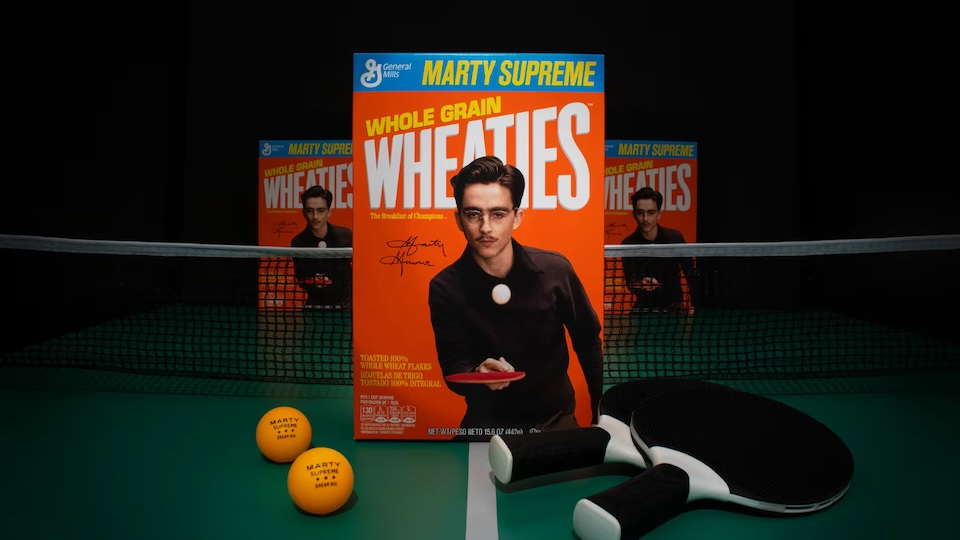
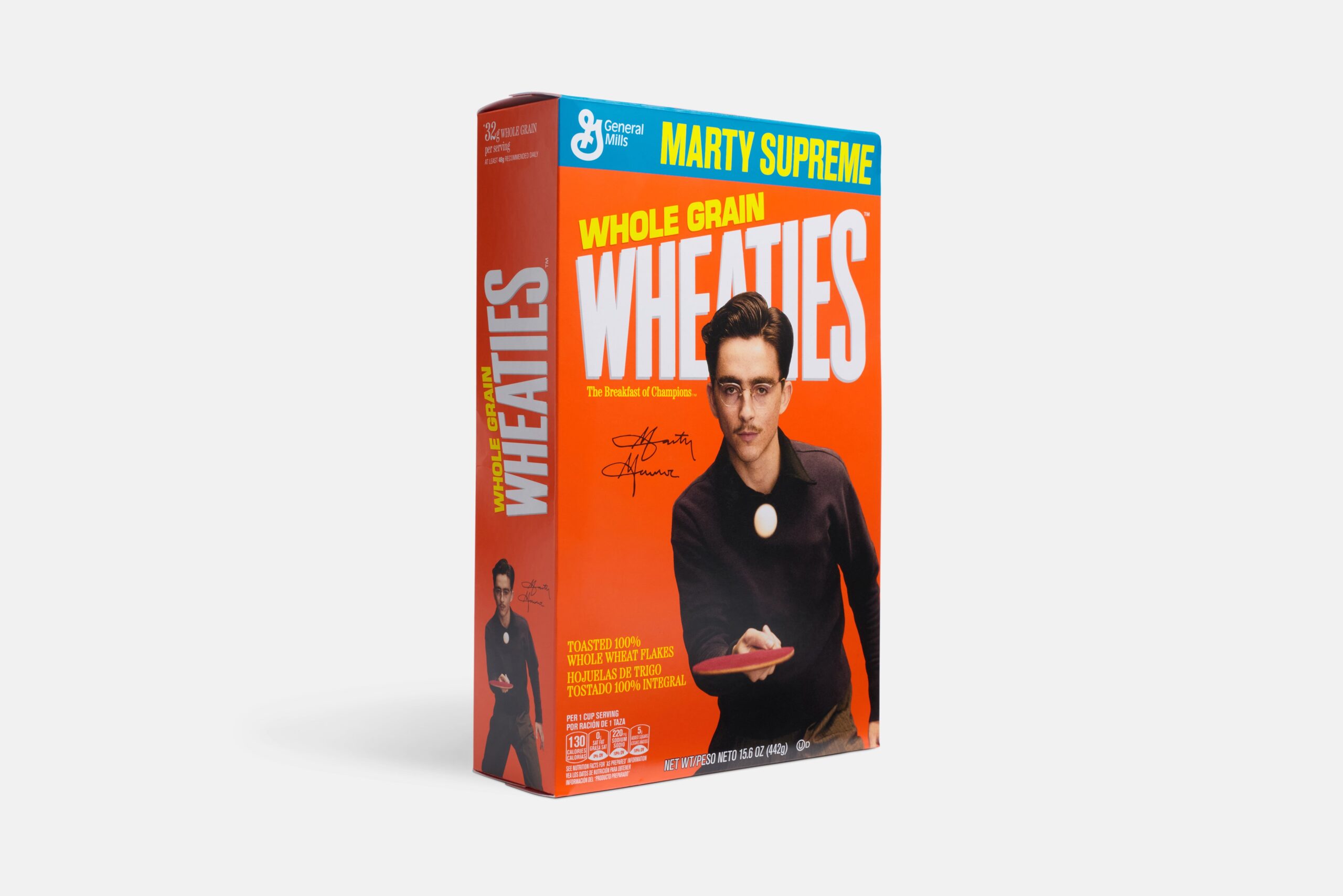
The centerpiece of this sports crossover? Timothée Chalamet’s Marty Supreme character landing on a Wheaties box, the cereal brand’s coveted packaging that has featured athletic legends for over a century. According to NBC News, the limited-edition boxes were part of a broader marketing strategy that included flying a massive blimp over Los Angeles and releasing exclusive merchandise.
For context, Wheaties boxes have traditionally been reserved for the Michael Jordans, Serena Williamses, and Simone Biles of the world—athletes who’ve reached the pinnacle of their sports. By placing a fictional ping pong player alongside these icons, A24 blurred the lines between sports achievement and entertainment spectacle in a way that feels both audacious and oddly fitting for today’s cultural moment.
The Wheaties collaboration wasn’t random. Famous Campaigns notes that the film itself includes a scene where Marty declares it’s only a matter of time before he appears on the breakfast cereal. A24 took that meta moment and made it reality, turning a character’s fictional aspiration into tangible sports branding gold.
Sports Marketing Meets Streetwear Hype
What makes this campaign particularly relevant to sports entertainment is how A24 deployed tactics straight from the athletic apparel playbook. The studio created scarcity and hype around the $25 Wheaties boxes, which quickly sold out on their website. They also released a $250 windbreaker that became so coveted it drew massive crowds to a popup event in East Hollywood—crowds so large the LAPD had to intervene.

This mirrors the sneaker drop culture that has dominated sports marketing for years. Limited releases, inflated resale values, and fans camping out for exclusive merchandise are all hallmarks of how Nike, Adidas, and other sports brands have built anticipation around athlete collaborations. A24 simply applied this formula to a movie character, treating Marty Supreme with the same reverence brands give to signature athletes.
The Meta Marketing Masterclass
Adweek describes the overall campaign as calculated chaos, built around an 18-minute Zoom sketch where Chalamet pitched increasingly absurd promotional ideas. The genius was that A24 actually executed many of these “ridiculous” concepts in real life, including the Wheaties box.
This self-aware approach resonates with how modern sports marketing has become increasingly playful and internet-savvy. Think of athletes like Giannis Antetokounmpo doing absurdist comedy bits for brand partnerships, or Pat McAfee turning sports commentary into entertainment spectacle. The line between serious athletic promotion and pure entertainment has been dissolving for years—A24 just accelerated the process by removing the actual athlete entirely.
Why This Matters for Sports Entertainment
The Marty Supreme campaign represents something bigger than clever movie promotion. It demonstrates how sports branding conventions—the prestige of a Wheaties box, the scarcity model of athletic merchandise, the elevation of competitors to celebrity status—have become cultural tools that transcend actual sports.
When a fictional ping pong player can generate the same fervor as a championship athlete’s signature shoe drop, it raises questions about what sports marketing even means anymore. Are brands selling athletic achievement, or are they selling the idea of achievement? Is the Wheaties box about celebrating winners, or about recognizing whoever captures the cultural zeitgeist?
A24 didn’t answer these questions so much as exploit the ambiguity. By treating their movie character like a sports icon, they proved that in 2025, the mechanics of sports marketing can generate excitement regardless of whether anyone actually competed.
The Campaign That Kept Giving
Beyond the Wheaties collaboration, the campaign deployed sports-style spectacle at every turn. The 135-foot orange blimp floating over Los Angeles recalled the Good Year blimp that’s been a fixture at major sporting events for decades. The popup merchandise chaos mirrored sneaker release mayhem. Even Chalamet’s unexpected public appearances echoed how athletes create moments by showing up at fan events.
What A24 understood is that sports marketing has perfected the art of making people feel like they’re part of something exclusive and culturally significant. By borrowing those playbooks and applying them to a film about ping pong, they created a campaign that felt less like traditional movie promotion and more like witnessing an athlete’s cultural ascension.
The $25 Wheaties boxes are likely sitting on collector’s shelves next to vintage Jordan cereal boxes and rare baseball cards. In that sense, A24 didn’t just market a movie—they created sports memorabilia for a character who never played a real game. And somehow, that feels perfectly appropriate for where sports and entertainment culture have landed in 2025.
Sources: NBC News, Adweek, Famous Campaigns